1. Introduction
Software Asset Management (SAM) is a structured approach to managing, optimizing, and governing software assets throughout their lifecycle—from procurement and deployment to usage, renewal, and retirement. As enterprises accelerate digital transformation and adopt hybrid IT environments, Software Asset Management has become essential for controlling costs, mitigating compliance risks, and improving operational transparency.
The modern enterprise software landscape is increasingly complex, driven by SaaS proliferation, subscription-based licensing, and rapid application deployment. Software Asset Management platforms provide centralized visibility into software usage, licensing entitlements, and contractual obligations, enabling organizations to align IT spend with actual business needs.
Today, SAM is no longer limited to audit readiness. Advanced Software Asset Management solutions deliver real-time insights, automation, and analytics that support strategic decision-making, vendor negotiations, and long-term IT governance.
Click Here For More Information: https://qksgroup.com/market-research/spark-matrix-software-asset-management-q3-2025-8553
2. Market Drivers and Adoption Trends
One of the primary drivers of Software Asset Management adoption is rising software expenditure. Organizations now manage hundreds—often thousands—of applications across on-premises, cloud, and SaaS environments. Without effective SAM, enterprises face overspending, underutilized licenses, and unexpected true-up costs.
Regulatory compliance and audit pressure further elevate the importance of Software Asset Management. Vendors such as Microsoft, Oracle, SAP, and IBM conduct frequent license audits, exposing organizations to financial penalties if entitlements are mismanaged. SAM platforms help enterprises remain audit-ready through continuous compliance monitoring.
The shift toward SaaS and cloud consumption models has also reshaped Software Asset Management requirements. Modern solutions integrate with IT Service Management (ITSM), Cloud Management Platforms (CMP), and FinOps tools to provide holistic oversight across dynamic environments.
3. Challenges in Software Asset Governance
Despite growing awareness, many organizations struggle with fragmented data sources, inconsistent license metrics, and limited visibility into actual software usage. Manual tracking methods are no longer sufficient for modern IT ecosystems.
Another challenge lies in aligning Software Asset Management with business objectives. IT teams often focus on compliance, while finance teams prioritize cost optimization. Leading SAM platforms bridge this gap by providing role-based dashboards and actionable insights for multiple stakeholders.
Integration complexity remains a concern as well. Enterprises require Software Asset Management solutions that seamlessly integrate with procurement, ITSM, endpoint management, and cloud platforms to deliver accurate and timely insights.
Download Sample Report Here: https://qksgroup.com/download-sample-form/%20?id=8553
4. SPARK Plus™ Perspective on Software Asset Management
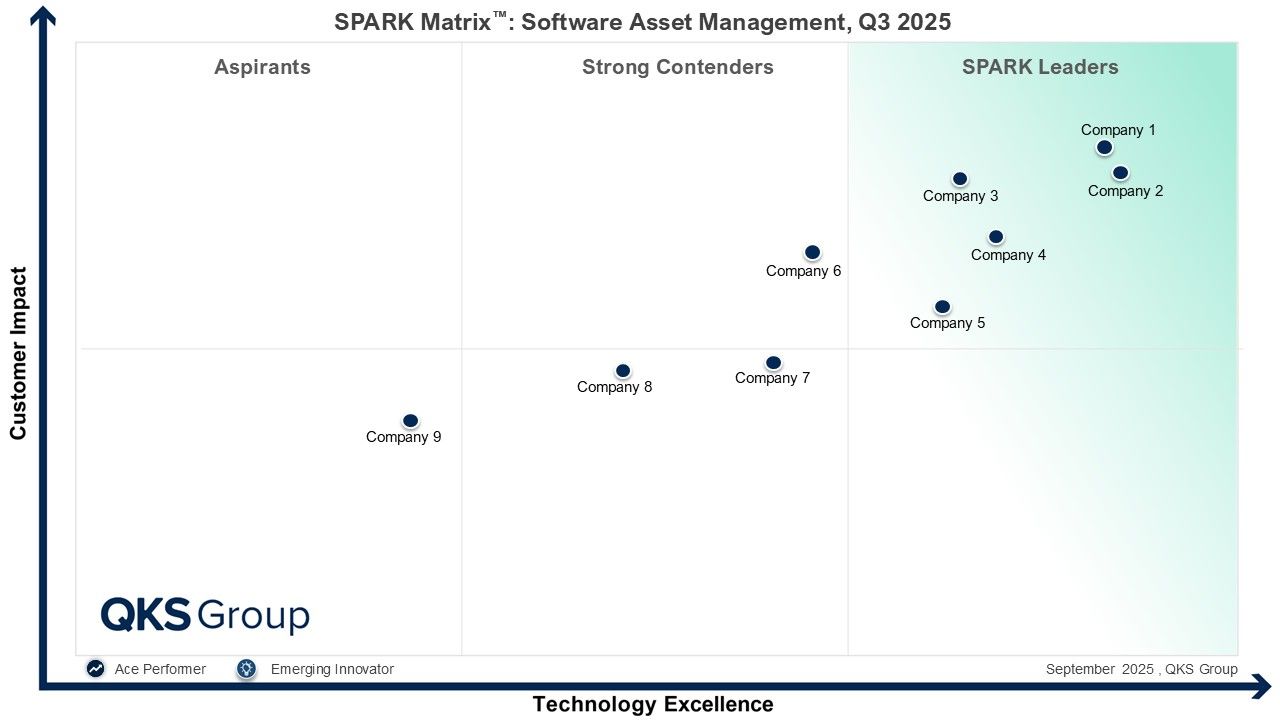
The SPARK Plus™ evaluation of the Software Asset Management market builds upon the SPARK Matrix™ framework by combining analyst research with verified user experiences.
SPARK Plus™ highlights vendors that deliver not only strong license management capabilities but also measurable business outcomes—such as reduced software spend, improved compliance posture, and operational efficiency. The platform uncovers how vendors perform in real-world environments, beyond marketing claims.
Leading Software Asset Management vendors differentiate through automation, AI-driven usage analytics, SaaS discovery, and deep publisher expertise. SPARK Plus™ insights enable enterprises to understand vendor maturity, roadmap alignment, and customer satisfaction across industries and regions.
5. Buyer Takeaways and Strategic Value
When evaluating Software Asset Management solutions, enterprises should prioritize:
- Accurate discovery across on-prem, cloud, and SaaS environments
- License optimization and reclamation capabilities
- Audit readiness and continuous compliance monitoring
- Integration with ITSM, procurement, and FinOps platforms
By leveraging SPARK Plus™ insights, decision-makers can confidently select SAM platforms that align technology governance with financial discipline.
Become A Client: https://qksgroup.com/become-client
6. Conclusion
Software Asset Management has evolved into a strategic discipline that drives cost efficiency, compliance, and IT transparency. As software ecosystems grow more complex, SAM platforms provide the intelligence enterprises need to regain control.
With SPARK Plus™, organizations gain a balanced view of the Software Asset Management market—combining analyst expertise with real user validation to support informed, risk-aware investment decisions.